

Crane Basket Capacity: How Much Weight Can a Material Basket Hold?
By Mike Nelson, Posted in Materials Handling
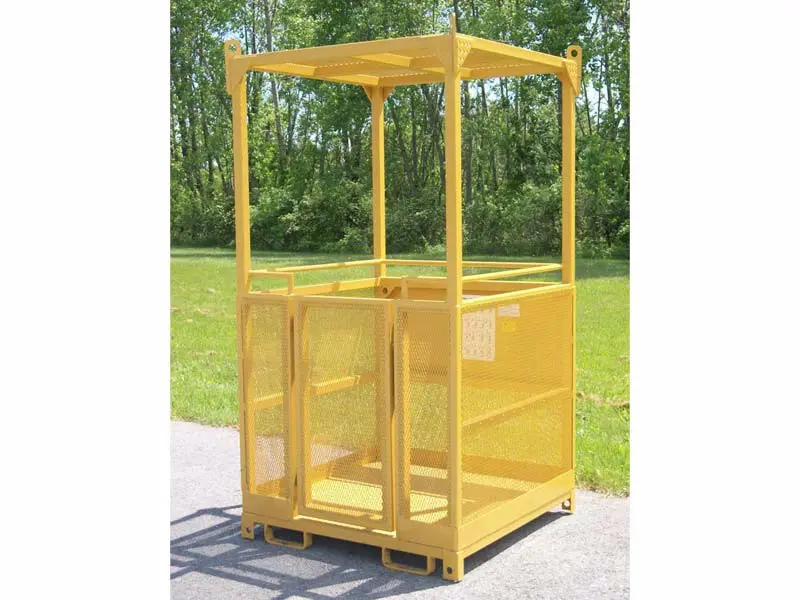 How much can a crane material basket actually hold? Standard material lifting baskets are available with 2,000-, 4,000-, and 6,000-lbs. payload capacities, but the rated crane basket capacity is only one limit that matters during a lift.
The weight of the basket itself, the actual payload, load distribution, rigging, crane configuration, and operating conditions all affect the complete lifting system. Material baskets are designed for freight only. Applications involving personnel require equipment specifically designed for that purpose, such as crane man baskets.
Rated Payload vs. Total Suspended Load
The rated material basket capacity is the maximum payload the basket is designed to carry. It does not include the basket’s own empty weight.
That distinction becomes important quickly.
For example, the MBM-9-4 material basket has:
- 60″ x 60″ x 48″ usable dimensions
- 4,000-lbs. payload capacity
- 1,000-lbs. empty basket weight
With 4,000 lbs. of material inside, the basket and payload alone weigh 5,000 lbs. The crane must handle that suspended weight along with applicable rigging or other working gear as required by its load chart and operating instructions.
In other words, a 4,000-lbs. basket does not represent a 4,000-lbs. crane load.
Verify the Actual Weight of the Load
Choosing the right lifting basket capacity starts with knowing the actual weight of everything that will be carried.
That may include:
- Tools and jobsite equipment
- Construction materials
- Palletized products
- Components and fabricated parts
- Containers or packaging
- Equipment carried with the material
Physical size is not a reliable way to estimate weight. A relatively compact load of steel components can weigh much more than a larger load of lightweight material.
Load weight should be established using reliable information such as manufacturer data, known material weights, verified calculations, or an appropriate weighing method. Crane operations also require the load to remain within the crane’s rated capacity, so an inaccurate payload estimate can affect more than the basket selection.
Load Distribution Matters
A basket can be below its rated capacity and still be loaded poorly.
If most of the weight is concentrated near one side or corner, the combined center of gravity shifts away from the center of the basket. The basket may hang out of level, and the force carried by the individual rigging legs may no longer be equal.
Heavy items should be positioned with load balance in mind, and materials need to remain secure as the basket is raised, traveled, and lowered.
Standard baskets include four internal tie-down points. Additional tie-down locations can be added when the load requires them. The usable basket dimensions also need to provide enough room to position the material properly rather than forcing a heavy or irregular load into an unsuitable footprint.
Check the Crane Capacity Separately
A crane material basket rated for 6,000 lbs. does not mean every crane can lift a 6,000-lbs. payload in that basket.
The crane has its own capacity limits, and available capacity can change with the configuration of the lift. Important factors can include:
- Operating radius
- Boom length and configuration
- Counterweight configuration
- Outrigger or support setup
- Hook and rigging arrangement
- Wind and other operating conditions
The crane load chart for the actual configuration determines the available lifting capacity.
This is why the basket rating and crane rating have to be checked separately. The basket may be capable of carrying the material even when the crane does not have enough available capacity at the required radius.
Rigging Is Part of the Capacity Check
The components between the crane hook and the basket have limits of their own.
Slings, shackles, hooks, master links, and other rigging must have adequate working load limits for the intended lift. Rigging identification needs to be legible, and rigging used for material handling should be inspected before use on each shift and removed from service if defects are found.
Sling geometry also matters. As the sling angle becomes shallower, tension in the individual sling legs increases.
Material baskets use four corner lifting lugs and are designed around a lifting angle of 60 degrees or greater. The actual rigging still needs to be selected for the load, basket, and lifting configuration.
Avoid Shock Loading and Load Movement
Rated capacity does not account for improper handling.
Snagging a suspended load, abrupt starts or stops, or uncontrolled swinging can introduce forces beyond those present in a smooth lift. Shock loading of slings is prohibited, and sudden load movement can also change how forces are distributed through the basket and rigging.
The materials inside the basket should remain secured throughout the lift. Staying under the stated basket capacity does not compensate for a shifting load or uncontrolled crane movement.
Basket Dimensions and Capacity Are Separate Decisions
Physical size does not determine how much weight a basket can carry.
The same 48″ x 48″ x 48″ usable basket dimensions, for example, are available in several capacity classes:
| Model | Usable Dimensions | Payload Capacity | Empty Weight |
| MBM-4-2 | 48″ x 48″ x 48″ | 2,000 lbs. | 690 lbs. |
| MBM-4-4 | 48″ x 48″ x 48″ | 4,000 lbs. | 720 lbs. |
| MBM-4-6 | 48″ x 48″ x 48″ | 6,000 lbs. | 730 lbs. |
Basket dimensions should therefore be selected around the physical size, shape, and arrangement of the material. Capacity should be selected around its verified weight.
A larger basket is not automatically stronger, and a smaller basket is not automatically lower-capacity.
Frequency and Working Conditions Affect Selection
Frequency of use does not change the basket’s rated capacity, but it does affect equipment selection, inspection, and maintenance planning.
A basket used regularly on demanding building and construction jobs may encounter different service conditions from one used occasionally in a controlled environment. Rigging must be inspected before use on each shift and as necessary during use, with service conditions determining whether additional inspections are needed.
Each basket must be tested at three times its rated capacity per OSHA and MSHA (Mining regulations). Every basket Koke sells will come with a Load Test certificate.
The environment can also affect basket construction. Stainless steel is available for chemical, corrosive, and water applications where additional corrosion resistance is required.
When a Standard Basket Is Not Enough
Capacity is only one reason an application may require a custom basket.
A different configuration may make sense when the job calls for:
- Custom length, width, or height
- A different payload capacity
- Swing-out doors or loading ramps
- Additional tie-down points
- Different fork pockets
- Steel grating flooring
- 6-inch steel casters
- Stainless steel construction
- A basket designed around unusually shaped equipment or material
Standard baskets include two-way forklift entry and fork pockets that accommodate forks up to 2″ x 6″, but the basket can be configured differently when the material-handling process requires it.
The important question is not simply, “How many pounds can the basket hold?” It is whether the basket’s capacity, dimensions, access, load securement, and lifting arrangement all match the job.
Know Every Limit Before the Lift
A 2,000-, 4,000-, or 6,000-lbs. crane basket capacity tells you the allowable payload for that basket. It does not replace the other capacity checks required for the lift.
Before lifting, know the actual material weight, include the basket’s empty weight in the suspended load, distribute and secure the material properly, verify the rigging configuration and working load limits, and confirm the crane has sufficient capacity at the planned radius and setup.
When the required capacity, dimensions, or handling features fall outside a standard configuration, contact us with the load weight, material dimensions, and lifting requirements so the basket can be configured around the application.